

IT | EN







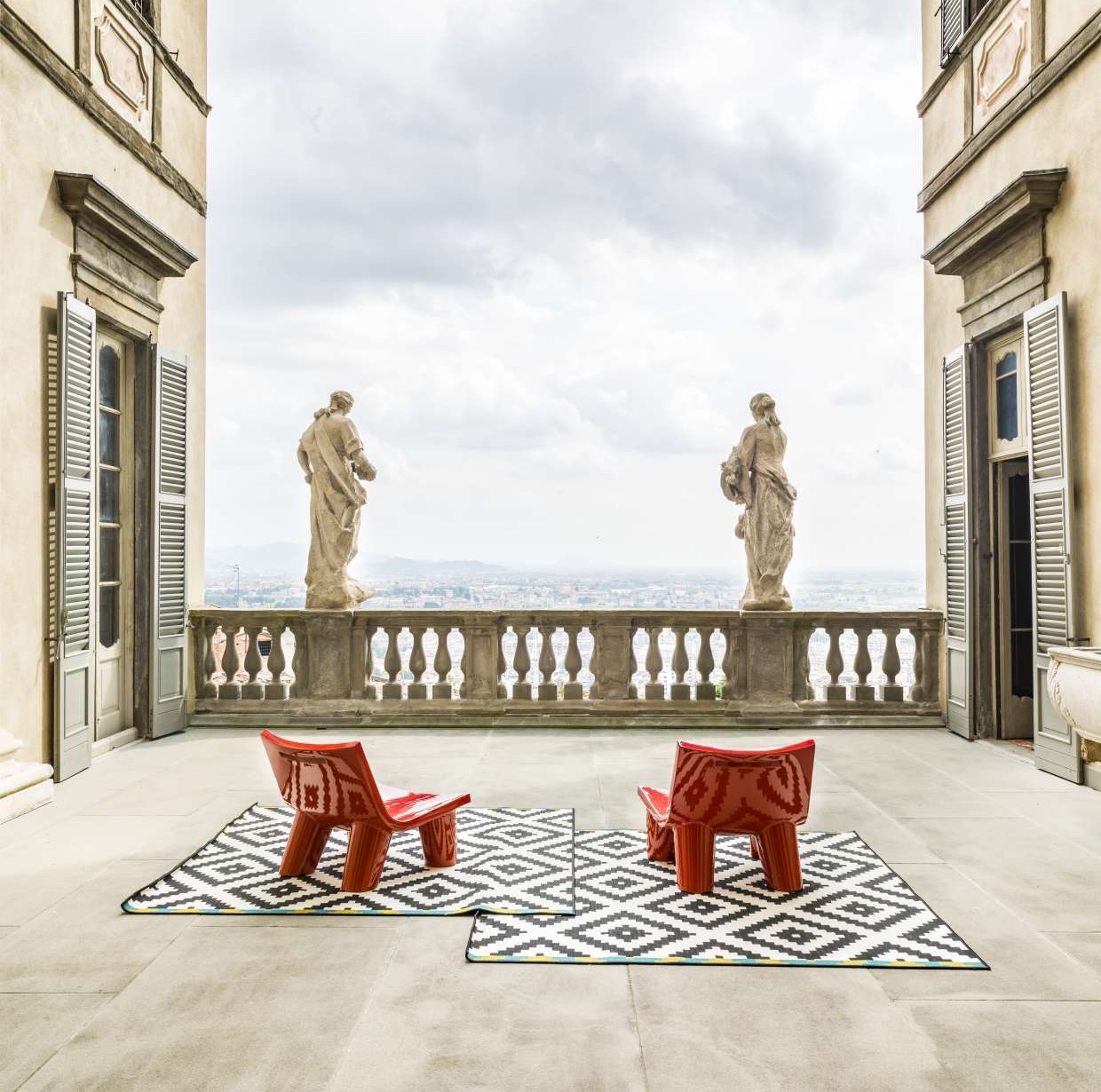
A pop-up operation feeds new life and arouses interest in beautiful houses-museums in the area of Bergamo under the initiative of DimoreDesign. Within old walls, breakaway elements such as furniture by top Italian designers make an appearance. A temporary operation that, in addition to on site visits, deserves a book. In progress.
I always thought about the fascination of contrasts, about cultural richness of comparison, even how much antique feeds the new (yet the “old” are a fundamental support for the young), about the correspondences among creative thoughts originating from either close or distant countries, times and cultures.
The great initiative “Designers for Bergamo” shows in a plastic and immediate way how beauty integrates with other beauty, even though according to orthodox thought it may seem not to match at all. Of course, this is no longer true today. The most beautiful houses in the world gathers passionate pieces and leave pre-set “styles” combining antique to contemporary, memory to experimentation, personality-design to avant-garde art, in a sort of in-progress collecting that tells a lot about who chooses and uses it...
A pop-up operation feeds new life and arouses interest in beautiful houses-museums in the area of Bergamo under the initiative of DimoreDesign. Within old walls, breakaway elements such as furniture by top Italian designers make an appearance. A temporary operation that, in addition to on site visits, deserves a book. In progress.
I always thought about the fascination of contrasts, about cultural richness of comparison, even how much antique feeds the new (yet the “old” are a fundamental support for the young), about the correspondences among creative thoughts originating from either close or distant countries, times and cultures.
The great initiative “Designers for Bergamo” shows in a plastic and immediate way how beauty integrates with other beauty, even though according to orthodox thought it may seem not to match at all. Of course, this is no longer true today. The most beautiful houses in the world gathers passionate pieces and leave pre-set “styles” combining antique to contemporary, memory to experimentation, personality-design to avant-garde art, in a sort of in-progress collecting that tells a lot about who chooses and uses it.
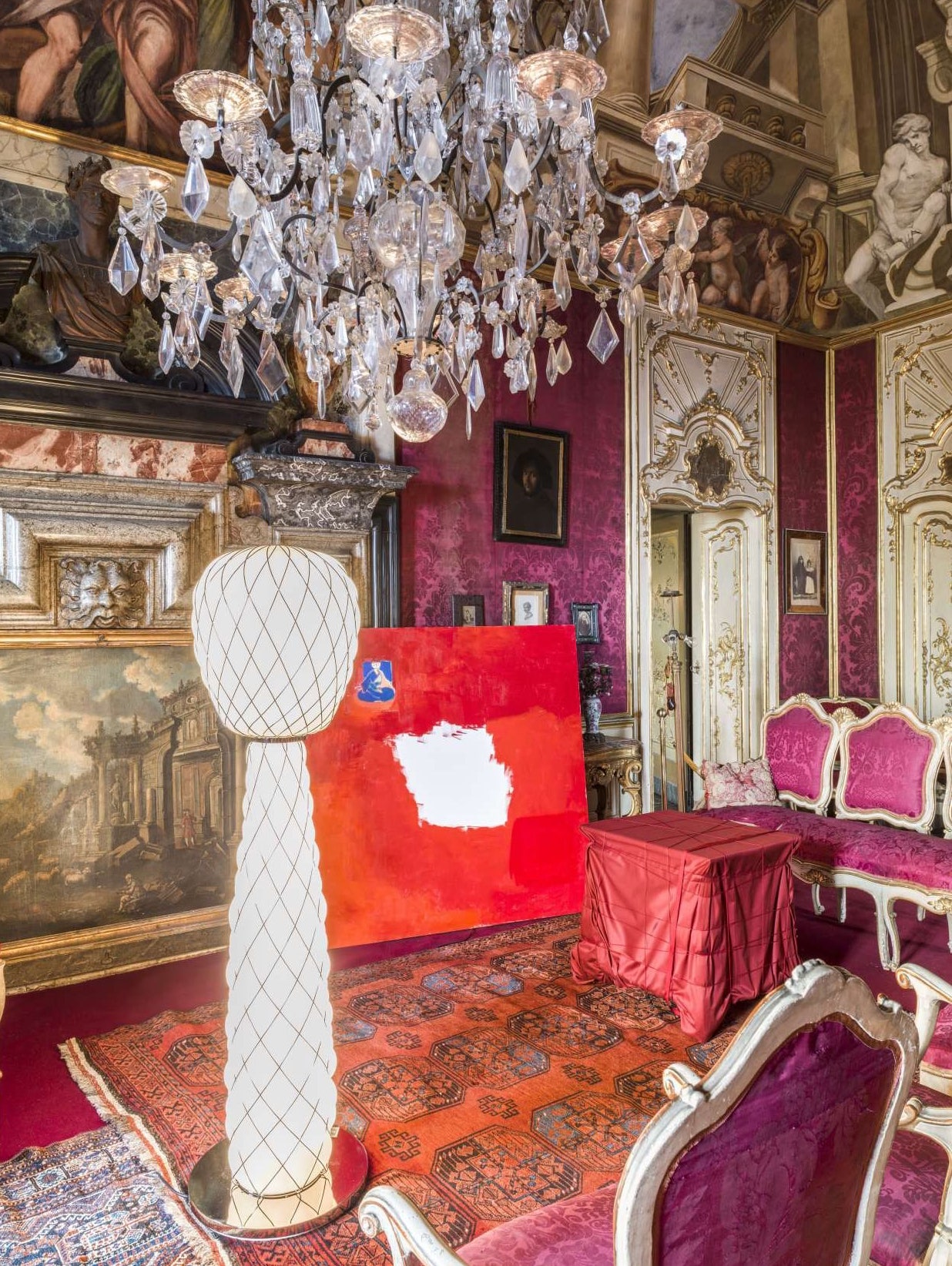
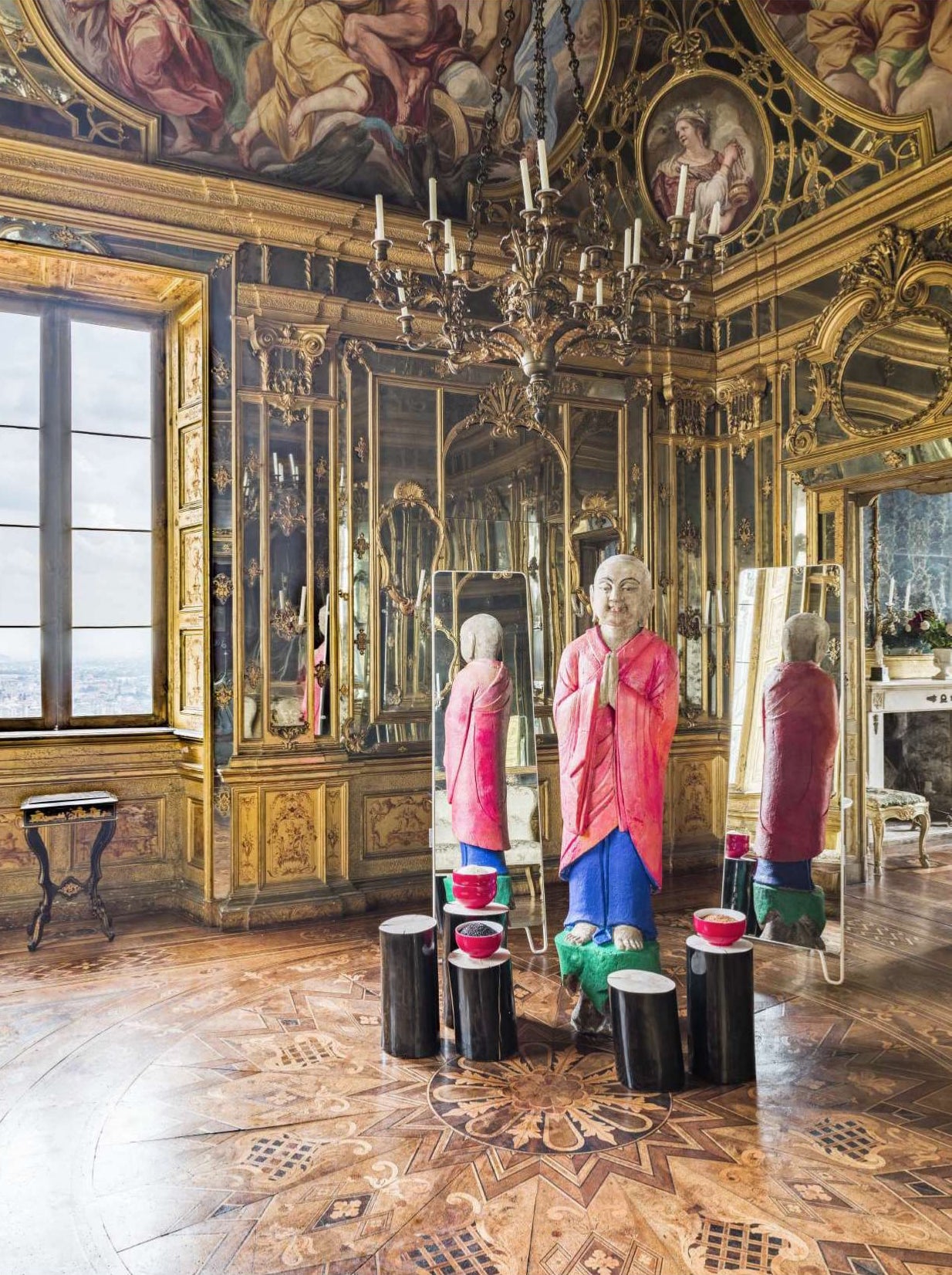
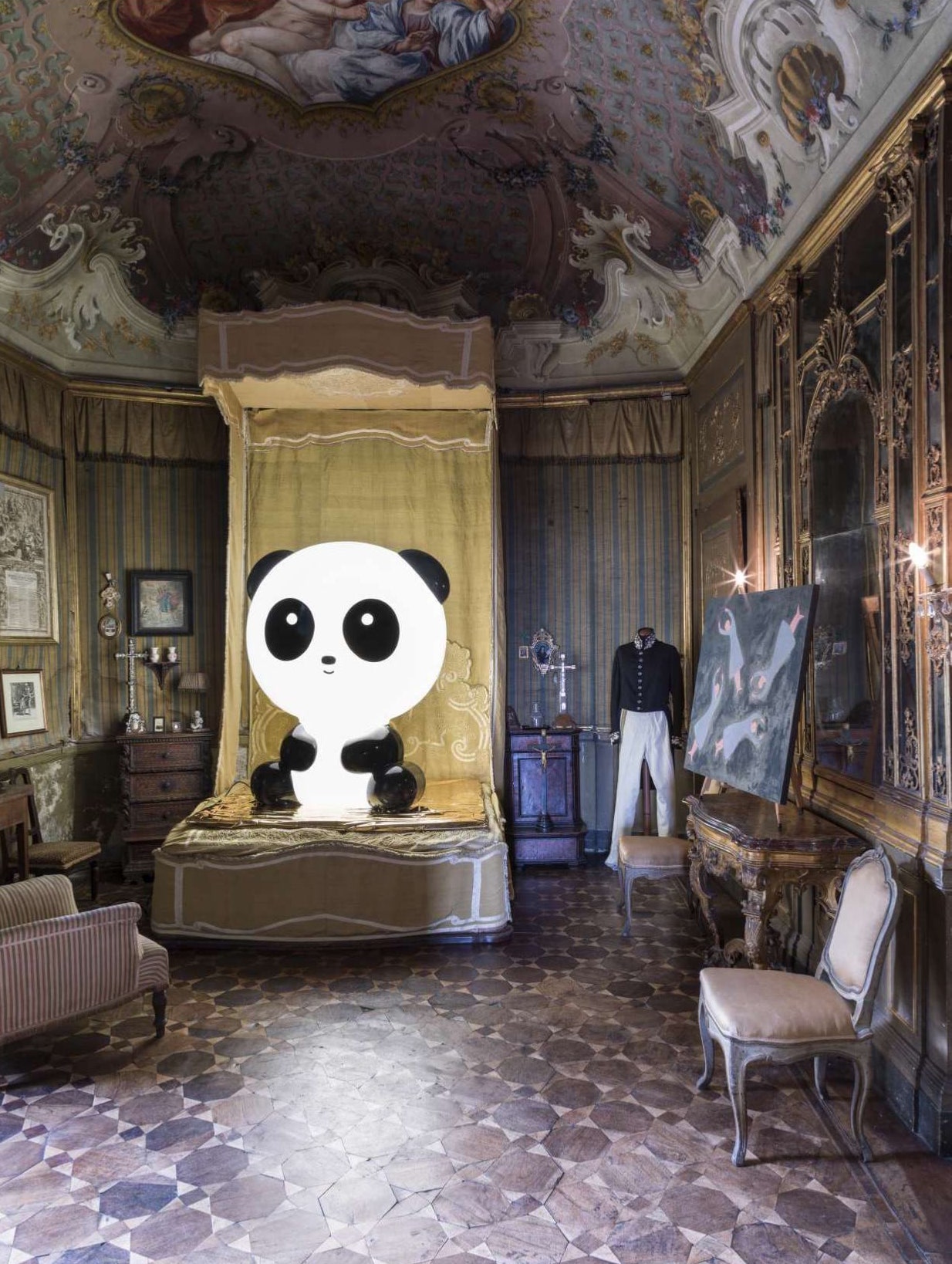
This is how DimoreDesign got involved in a complex and fascinating operation. A cultured and unpredictable pop-up. Bringing to historical abodes, almost museums, evidence of past times, objects of present times, by contemporary designers and artists. The aesthetics by Paola Navone, Alessandro Mendini, Stefano Giovannoni, Aldo Cibic, Italo Rota, Formafantasma, and other stars found their way sometimes forcibly, sometimes naturally into these precious and majestic almost sacred environments, adding a smirk, a smile, a different thought.
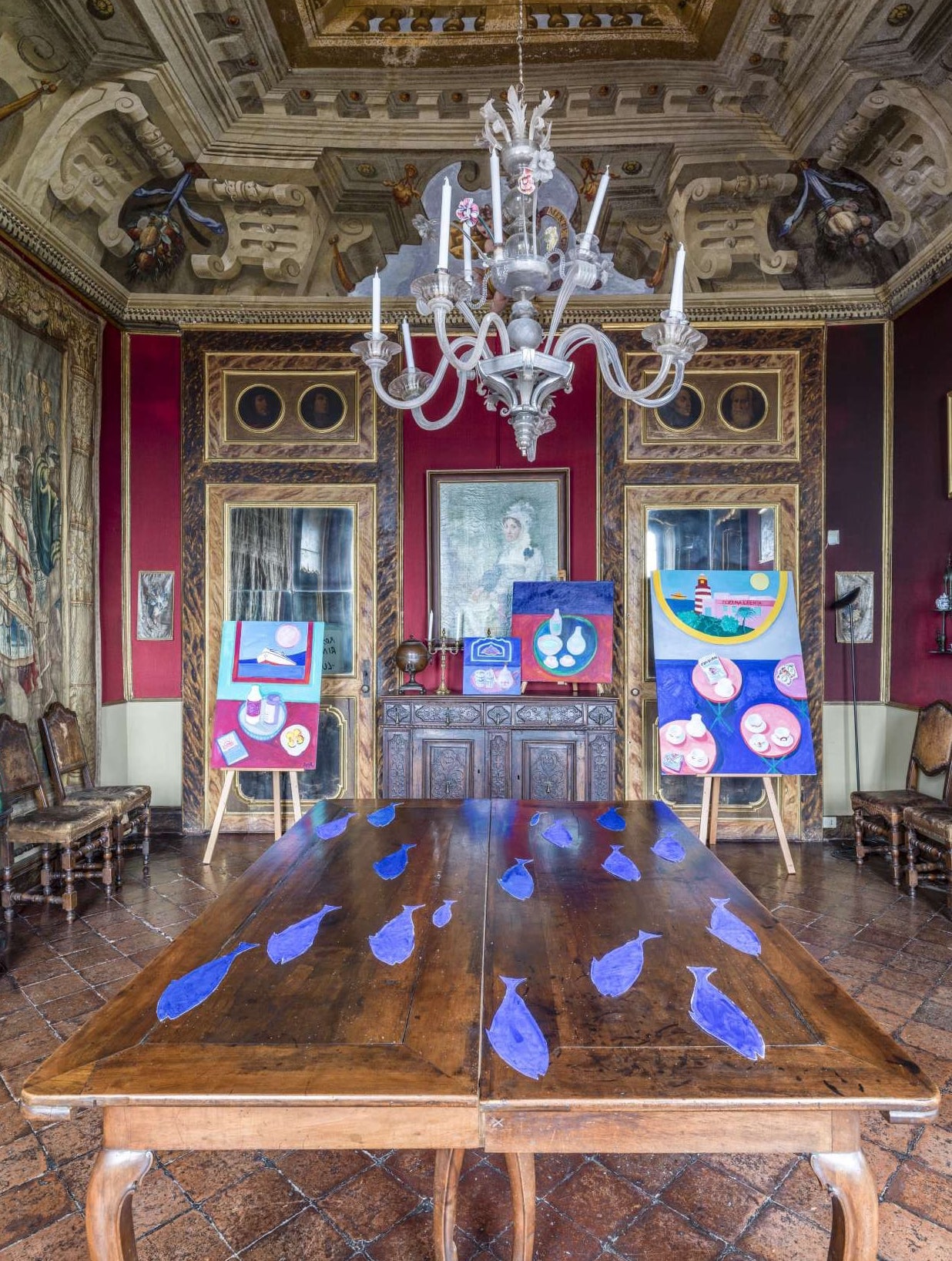
I have known Paola Navone for a long time, I always appreciated her free thought, her anarchist and unrestrained vision of design, her fantasy out of the box able to create a surprising installation from ceramic fragments of a dismantling factory (Richard Ginori, Padiglione Visconti, Fuorisalone in 2009) or from the dismemberment of majestic chandeliers (as she did for Barovier&Toso, Superstudio Più in 2010 and in 2016) or rather play with fishes and polka dots (more times than not).
Her belief is freedom, taste changing signature style in the past twenty years. And she explains “It is not as if you can analyse changes, the real change is that by now everything coexists and can coexist always more. There is more freedom for whoever uses design, that is a lot less obliging than before. It is like clothing, one is much more relaxed not minding the problem of which is the next six months collection, put together whatever you like, and this kind of evolution has occurred also in furniture, there is not this sort of subjugation to the architect or decorateur. People are more free in this respect. And then I think there is the more freedom for designers too who move in every direction. And we have a freer global scenario now open to creativity that was once considered to be inexistent o marginal such as Asia, Africa, rather than the north of Europe. The monopoly of style has broken a bit”.
Elective affinities also in contrasts typifying the houses rethought by DimoreDesign inserting contemporary design pieces are the evidence of this evolution, along with the interviews to the critic Giacinto di Pietrantonio. I am happy having been invited to act as testimonial for one of them. I chose Palazzo Terzi with the surprise intervention of Paola Navone, with the artist Rosa Maria Rinaldi.
“Designers for Bergamo” appointment dedicated to Paola Navone and Rosa Maria Rinaldi: