

IT | EN







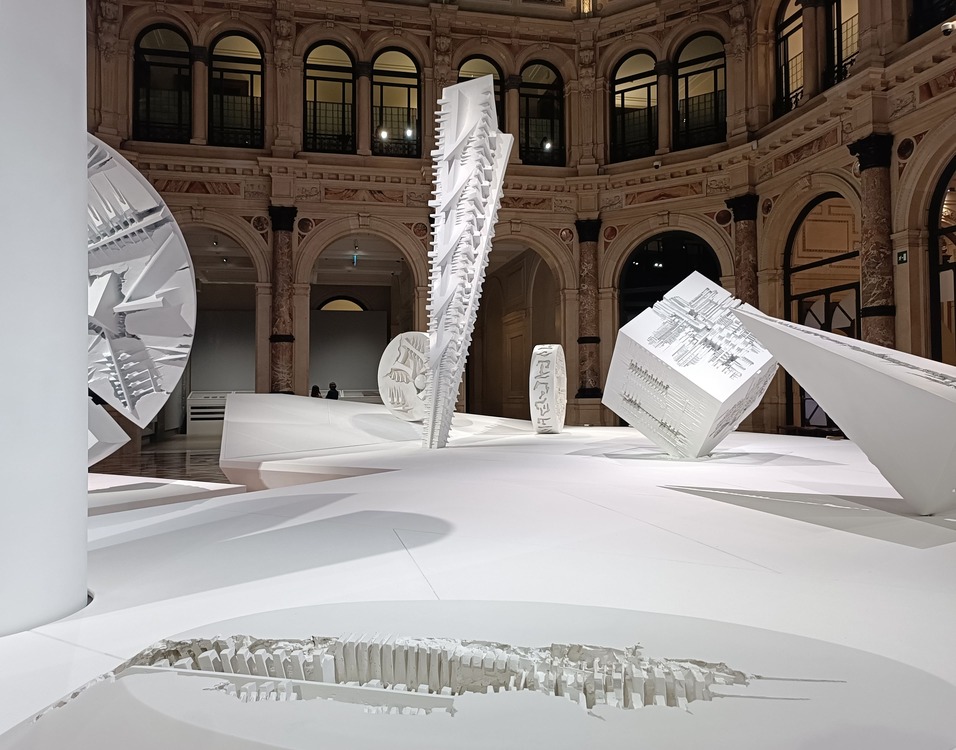
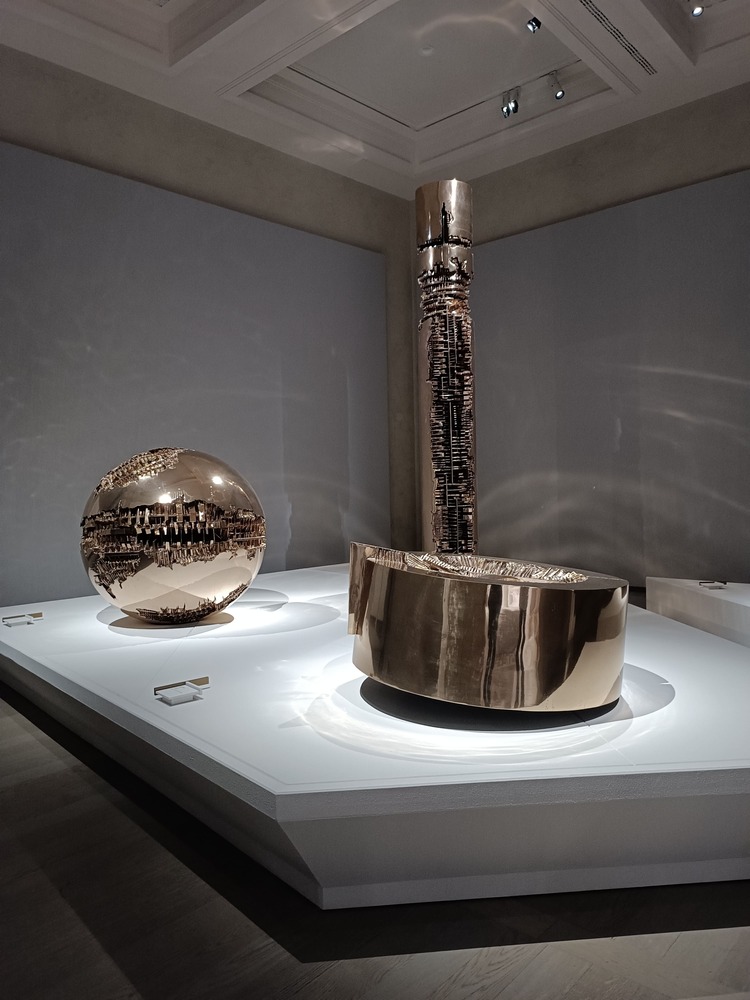
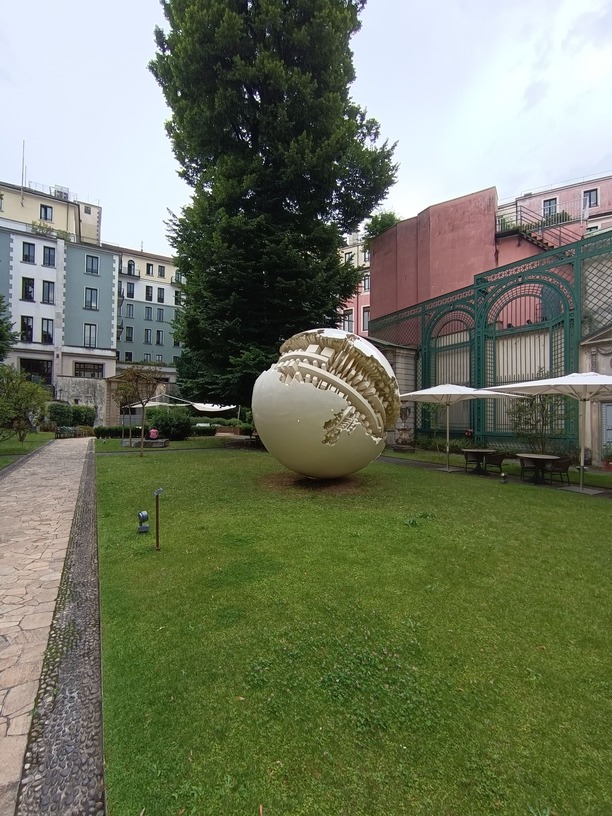
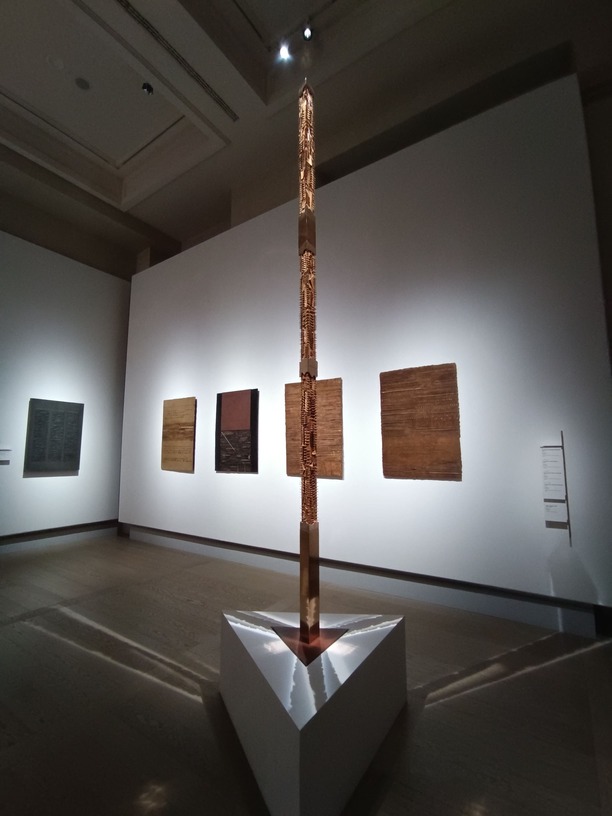
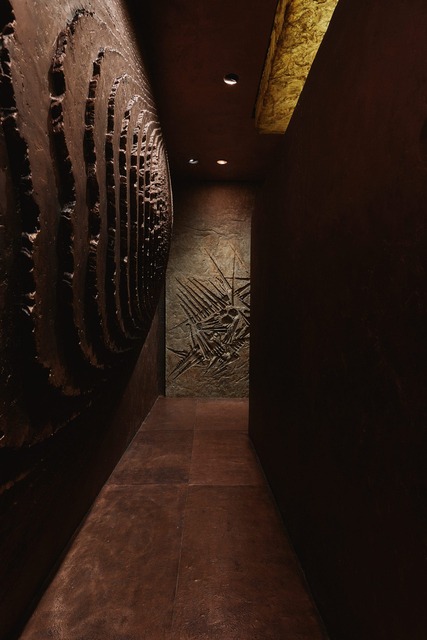
What emerges is an artist obsessed with matter, its fractures, and its mysteries. Surfaces open up, break apart, and reveal hidden worlds. A language that naturally enters into dialogue with twentieth-century masters such as Boccioni, in a continuous comparison between energy, movement, and the transformation of form. One of the most striking moments comes at the end of the exhibition path, when the works leave the gallery rooms and meet the garden and inner courtyard of the Gallerie d’Italia. Here the Grande Sfera in white fiberglass becomes almost an apparition: a smooth, luminous form contrasting with the more famous bronze versions, opening up an ideal reflection on Pomodoro’s exploration of the internal deconstruction of form. It is the moment when one truly understands how the artist has always conceived his sculptures not as isolated objects, but as presences capable of transforming the space that hosts them. And it is precisely from here that the desire to continue the journey arises. To truly understand Pomodoro’s universe, it is worth leaving the city centre and heading towards the Tortona District, where the Arnaldo Pomodoro Labyrinth is located. A place that remains relatively little known considering its importance. More than a museum, it is a work meant to be walked through: an immersive environment made of symbols, passages, and imaginary architectures inspired by the Epic of Gilgamesh. The Labyrinth has been a project in continuous transformation, developed by Pomodoro over many years, almost like a living organism that grows and reshapes itself over time. Today it integrates perfectly into the cultural and artistic context of the Tortona District, an area that has itself undergone a profound evolution, eventually becoming one of the most recognizable expressions of Milan’s contemporary creative scene. The exhibition at the Gallerie d’Italia tells the story of the artist. The Labyrinth, instead, allows one to enter his imagination. In this sense, for Pomodoro the artist is never an isolated “unicum”, but part of a broader and living cultural fabric, where each work is born from dialogue with its own time and returns it transformed. As he himself once said, “the artist is part of a fabric of culture, his active contribution can never cease”.